
QR Code® (2D Barcode)
QR Code® is a two-dimensional barcode created by the Japanese corporation Denso-Wave in 1994. The QR is derived from Quick Response, as the code is intended to be decoded at high speed. QR Code became popular for mobile tagging applications. Because of the built-in support for Kanji encoding, QR Code is widely used in Japan.
Application Areas
QR Code is mainly used in Asia (Japan) for automotive and logistic applications. Starting with 2006/2007 the QR Code is also in use in the areas of mobile marketing and business (e.g. Japanese business cards).
Depending on the application a QR Code can be used to encode specific URLs or ticket numbers: in a mobile marketing scenario a QR Code symbol is printed or displayed on products or marketing related material (like displays, magazines or web-sites). A user can now scan and decode this QR Code using a mobile phone with a built-in camera and suitable decoder software. After decoding the QR Code symbol, the user is forwarded to product related web-sites or marketing campaigns.
In Switzerland, the QR code is used in the numerical part of the QR-bill, which will replace the previous payment slips from June 2020. The Swiss QR Code contains all payment information necessary to trigger payments.
QR-Code Examples
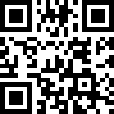
QR Code with encoded URL (Mobile Marketing) 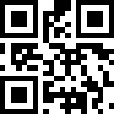
QR Code with 6 characters 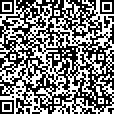
QR Code with 200 characters
Classification
QR Code is a 2D barcode symbology with very high data density. In practice up to several hundred bytes are encoded in a single symbol. Each dot in a QR Code symbol represents a bit. In contrast to linear bar-codes which encode the information usually in the ratio of the bars or spaces to each other a QR Code is more tolerant with respect to poor printing quality.
History
QR Code was developed in Japan in 1994 by a team led by Masahiro Hara at DENSO. It was originally designed to speed up parts tracking in automotive production and hold more information than conventional barcodes. The three distinctive squares in its corners allow readers to locate the code quickly. Publicly available specifications and international standardization in 2000 helped it spread beyond industrial applications. From 2002, mobile phones with QR Code readers made it popular in everyday life in Japan, followed by worldwide adoption for uses such as web links, marketing and electronic tickets.
Aliases
QR Code is also known under the names Quick Response Code, QR-Code.
Technical Data
- Normative standards: The normative standards for the QR Code barcode symbology are named JIS X 0510 (Japan) or ISO/IEC 18004 (ISO International Standard).
- Data capacity: A single QR Code symbol can hold up to 7089 numeric characters, 4296 alphanumeric characters, 2953 bytes (binary data) or 1817 Kanji characters (character set according to JIS X 0208). The capacity depends on the code version and error correction level.
- Character set: The original QR Code defined JIS-8/Shift-JIS as default character set, which corresponds to ECI 000020 (by design other character sets are possible by using different ECIs). While the current QR Code standard (since ISO/IEC 18004:2006) defines Latin-1 as default character set, mobile applications often use UTF-8 as default (without additional ECIs). So it's up to the bar code reader (or decoding application), which character set is used.
- Error correction: QR Code offers a built-in error correction based on Reed-Solomon algorithms. The error correction level can be adjusted (supported levels are Low, Medium, Quartile, High). Depending on the error correction level it is possible to restore between 7% (Low) and 30% (High) of unreadable codewords in a QR Code symbol without data loss.
- QR Code supports 'Structured Append'. Up to 16 QR Code symbols can be concatenated. If a scanner or decoder supports this feature, it returns the concatenated data content in the correct order.
- QR Code printing quality: To optimize barcode quality a QR Code symbol should not be printed with dots smaller than 4 to 5 device pixels.
QR-Code Generator Software
QR code generation is supported by the following products: