
GS1 DataBar
GS1 DataBar is a newer global bar code standard which has been adopted in 2010. GS1 DataBar should be available on all trade item scanning systems, and retail POS (point of sale) scanners should be able to differentiate between the various GS1 barcode symbologies.
- Application Areas
- Classification
- History
- GS1 DataBar Variants
- GS1 Composite Symbology™
- GS1 Composite Symbology™ Variants
Application Areas
GS1 DataBar is widely used in the health care industry for both pharmaceuticals and medical/surgical products, by GS1 Member Organizations (MOs), consumer goods manufacturers and trade associations.GS1 DataBar Examples
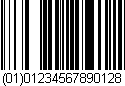
GS1-DataBar 
GS1-DataBar Stacked
Classification
- GS1 DataBar encodes 14 digits and can contain any of the 4 Global Trade Item Numbers (GTIN) types: GTIN 8, 12, 13, or 14.
- GS1 DataBar is 50% smaller than EAN-13 or UPC-A Bar Code Symbols but carries more information than the current EAN/UPC bar code. The new GS1 DataBar symbology uses special identification bars to avoid the requirement of a quiet zone around the bar code.
- Each member of the GS1 DataBar family has data compacting methods optimized for the data strings that they will encode.
- All GS1 DataBar symbols include a linkage flag. If the linkage flag is equal to 0, then the GS1 DataBar stands alone. Otherwise when it is equal to 1, then a 2D component is associated with the GS1 DataBar family linear component and its separator pattern.
- GS1 DataBar can carry GS1 Application Identifiers (AI) like serial numbers, lot numbers, and expiration dates which allow better product monitoring, product tracing and product category management (click here for more details).
History
GS1-DataBar, formerly called Reduced Space Symbology, was renamed to GS1 DataBar to avoid confusion with the popular RSS XML Feed technology, which is broadly used on the Web for "Really Simple Syndication".
GS1 DataBar is an even newer standard which became official in 2010. GS1 DataBar should be available on all trade item scanning systems, and retail Point-of-Sale (POS) scanners should be able to differentiate from the various GS1 barcode languages by then.In the beginning, UPC or Universal Product Code was used in North America. But in 2005, the EAN-13 or the European standard was adopted as the global bar code standard. GS1 DataBar, however, is not expected to revolutionize the retail trade. But rather seen as a stepping stone to the adoption of Electronic Product Codes (EPC-RFID) carried on RFID devices .
GS1 DataBar Variants
GS1 DataBar (DataBar-14)
- Planned successor of EAN-13 and UPC-A in POS applications.
- Used for GTIN - 8,12,13,14
- Omnidirectional readable
- Can be used at POS
GS1 DataBar Truncated (DataBar-14 Truncated)
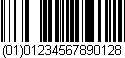
- Similar as GS1 DataBar 14 but with reduced height
- Used for GTIN - 8,12,13,14
- Not Omnidirectional
- Is not used at POS
GS1 DataBar Limited
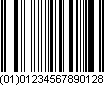
- Smaller than GS1 DataBar 14
- Lead digit is limited to 0 or 1 (no other values)
- Used for GTIN - 8,12,13,14
- Not Omnidirectional
- Is not used at POS
GS1 DataBar Stacked
- For very small items
- Used for GTIN - 8,12,13,14
- Not Omnidirectional
- Not used at POS
GS1 DataBar Stacked Omnidirectional
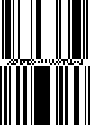
- Used for GTIN - 8,12,13,14
- Omnidirectional
- Can be used at POS
- Alias: DataBar-14 Stacked Omnidirectional
GS1 DataBar Expanded
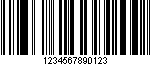
- Similar as EAN-128 but with reduced size
- Variable length with a capacity of up to 74 numeric / 41 alphanumeric characters
- All GS1 System identification numbers and Application Identifiers supported
- Omnidirectional
- Can be used at POS
GS1 DataBar Expanded Stacked
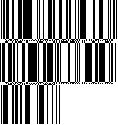
- About the same size as an UPC/EAN barcode
- Variable length with a capacity of up to 74 numeric / 41 alphanumeric characters in up to 11 stacked rows
- All GS1 System identification numbers and Application Identifiers
- Omnidirectional
- Can be used at POS
GS1 Composite: structure, variants and examples
GS1 DataBar Barcode Software
Generation of GS1 DataBar is supported by the following TEC-IT products: